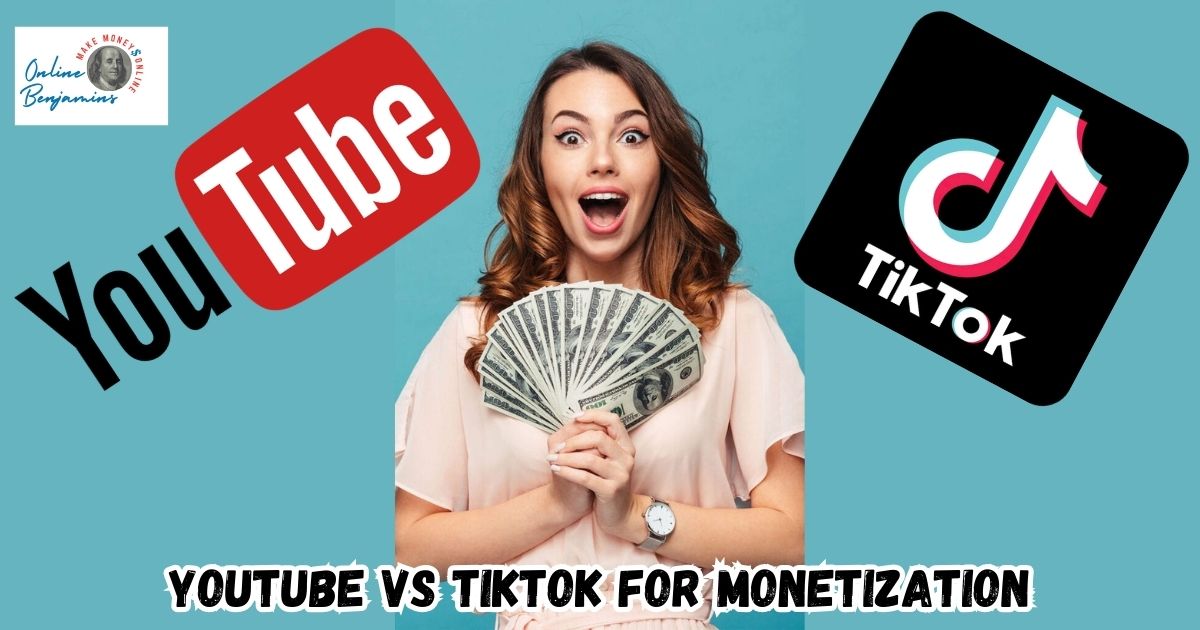
YouTube vs TikTok, both promise big opportunities for creators looking to earn money online, but they work in different ways. I’ve spent a lot of time checking out both platforms closely and have even experimented by uploading my own content on each.
QUICK LOOK: – What are the YouTube vs TikTok Payouts?
- YouTube (Longform): I typically see $1 to $5 RPM per 1,000 views. Channels focused on finance, tech, or business can reach $10 to $20+ RPM since advertisers pay more for those audiences.
- YouTube Shorts: The RPM is much lower, usually around $0.01 to $0.07 per 1,000 views. Sometimes payouts spike as high as $0.15 to $0.40, depending on region and month.
- TikTok (Creator Rewards for videos over 1 minute): This pays about $0.40 to $1.00 per 1,000 views. These numbers fluctuate more than YouTube’s and can change as TikTok tries out different payments. TikTok’s reward system can make it tough for creators to plan their monthly income.
- TikTok (Shorter videos, Old Creator Fund): Payouts were as low as $0.02 to $0.04 per 1,000 views, with even popular creators sometimes struggling to hit a few hundred dollars a month without outside brand work.
Deciding which platform pays more comes down to understanding how their monetization systems work, what kinds of videos do well, and the potential income from each. Here’s my honest breakdown of how YouTube and TikTok stack up in 2025 and 2026 for direct creator income.
YouTube Vs TikTok Monetization: Key Differences
YouTube has a long history of sharing ad revenue with creators, which makes it a favorite for people focused on building a full-time income from sharing videos. TikTok, by comparison, started with flat rewards from its Creator Fund and only recently moved to paying more for longer and higher engagement videos through the Creator Rewards Program.
Both give creators ways to get paid directly by the platform, but the consistency and size of these payouts can be quite different. If you want a stable, predictable income, YouTube’s ad revenue share on long videos consistently performs better. TikTok videos can be seen by millions in a day, but direct payouts are lower for similar view counts.
Each has its strengths. YouTube works best if you value reliable income and deep connections with your audience, while TikTok is the platform for viral growth and quick exposure, along with the possibility of landing outside deals.
How Does Each Platform Pay Creators?
Getting a sense of how creators get paid is crucial before deciding where to focus your attention. Here are the main ways each platform shares income with video creators:
- YouTube Ad Revenue: YouTube runs ads on your videos and splits that money with you. Income depends mainly on how many ad views you deliver, your audience’s country, and your channel’s niche.
- YouTube Shorts Monetization: For short-form videos, YouTube has a separate pool of ad money, so payouts are smaller per view compared to regular long-form videos.
- TikTok Creator Rewards Program: TikTok pays creators for videos over 1 minute that perform well, especially if they get lots of engagement. The pay-per-view is lower and less predictable than YouTube’s ad revenue share.
- TikTok Shop & Live Gifts: TikTok creators also earn through shopping integrations and live gifting, but these don’t work exactly the same as direct platform payouts.
I’ve watched friends and colleagues experiment with both apps. Most have found that YouTube provides a more stable monthly income from its Partner Program. The difference becomes more obvious when reaching 10,000 or more monthly views.
Direct Payout Breakdown of RPM and CPM Comparisons
Two important numbers define how much you can make: Revenue Per Mille (RPM) and Cost Per Mille (CPM). RPM is the amount a creator actually gets per 1,000 views after YouTube or TikTok takes their share. CPM is what advertisers pay per 1,000 ad impressions. Creators on both apps get paid according to these, but at very different rates.
- YouTube (Longform): I typically see $1 to $5 RPM per 1,000 views. Channels focused on finance, tech, or business can reach $10 to $20+ RPM since advertisers pay more for those audiences.
- YouTube Shorts: The RPM is much lower, usually around $0.01 to $0.07 per 1,000 views. Sometimes payouts spike as high as $0.15 to $0.40, depending on region and month.
- TikTok (Creator Rewards for videos over 1 minute): This pays about $0.40 to $1.00 per 1,000 views. These numbers fluctuate more than YouTube’s and can change as TikTok tries out different payments. TikTok’s reward system can make it tough for creators to plan their monthly income.
- TikTok (Shorter videos, Old Creator Fund): Payouts were as low as $0.02 to $0.04 per 1,000 views, with even popular creators sometimes struggling to hit a few hundred dollars a month without outside brand work.
Based on firsthand comparisons with my own uploads, YouTube pays more for the same number of views in almost every niche, especially for videos over eight minutes that bring in repeat watch time and engagement.
Which Platform Offers More Sustainable Income?
If you want to keep earning from videos you posted months or years ago, YouTube stands out by a wide margin. Here’s why:
- Evergreen Back Catalog: YouTube continues to serve ads and generate income on old videos, so even small channels earn some passive income as their library grows.
- Search and Recommendation: Many YouTube viewers stumble upon your content through search or suggested videos, breathing new life into old content and delivering stable viewing numbers well after upload day.
- TikTok Virality: TikTok videos usually earn most of their views in a handful of days. While the initial surge can be massive, the long tail of views—and income—drops off quickly. Only a few rare videos keep pulling in big numbers long term.
From my experience, the YouTube channel I run still gets daily views on uploads from over a year ago. These older videos continue to earn, something I don’t see with TikTok in the same way.
Other Ways Creators Make Money with Brand Deals and Sponsorships
Both YouTube and TikTok offer ways to make money beyond direct platform payouts. For many creators, these outside deals account for even more income than ads. Here’s how each platform matches up:
- YouTube Brand Deals: YouTube creators with loyal, focused audiences can secure sponsorships, shoutouts, and affiliate partnerships. Brands tend to pay more for longer, high-quality content.
- TikTok Brand Partnerships: TikTok is very popular with brands chasing viral campaigns, especially those targeting Gen Z. Sponsored TikTok videos and hashtag challenges can pay well, though the rates can be less consistent and are often tied to how many followers and views you have.
Many creators I know get their first big brand deal on TikTok due to fast growth, but settle into more consistent partnerships on YouTube as their content matures.
Common Questions About Monetization
Here are some of the top questions I get asked about earning money on YouTube versus TikTok:
If I only have time for one platform, which will earn more?
For long-term, stable income, YouTube is the better pick, especially if you focus on searchable, high-value topics. TikTok works well if you love creating lots of quick, clever content and are aiming for viral moments or occasional brand deals.
Can I earn a full-time income from TikTok direct payouts alone?
This is rare, unless you consistently reach millions of monthly views with longer videos (over 1 minute). Direct TikTok payouts are still lower and less reliable compared to YouTube. Most successful TikTokers mix in brand deals, live gifts, or TikTok Shop sales.
Do YouTube Shorts make as much as long-form content?
No. While Shorts can catch fire and pull lots of views quickly, their per-view payout is much lower. It’s best to use Shorts to grow an audience, then move viewers to your longer videos to raise real income.
Can I use both platforms at once?
Yes, and many creators do. Repurposing content across both apps boosts your chances of reaching new fans. Just remember that the same content may perform differently based on the platform’s algorithm and audience.
What to Consider Before Choosing a Platform for Monetization
It’s vital to consider your goals, style, and the topics you focus on, instead of only chasing the biggest payouts. Here are some real-world factors to think about:
- Type of Content: Detailed educational or how-to content generally does better on YouTube. Quick, visual, or trend-based clips work best on TikTok.
- Audience Age and Location: TikTok’s users tend to be younger and more global, while YouTube has a wider reach, including older viewers in higher-paying regions.
- Long-Term Plans: Building a brand or business is easier with evergreen YouTube videos. If you like fast projects and chasing trends, TikTok could suit your needs better.
- Time Available: YouTube videos often take longer to film and edit, but can pay more per video over time. TikTok allows for rapid, frequent uploads and real-time trends.
I suggest trying both platforms, tracking your numbers, and seeing where you enjoy creating the most. Many top creators balance the two to expand their audience and mix in some variety to their income streams. For a deeper understanding, YouTube’s official monetization resources or TikTok’s Creator Rewards guidelines can lay out more recent rules and program updates.
Final Thoughts on Choosing the Best Monetization Path
Getting started in 2025 and 2026 means more options for making money as a creator than ever before. From my experience, YouTube is still the strongest pick for sustainable, high-volume earnings, especially with long-form content that keeps providing income over time.
TikTok is an excellent spot for rapid audience growth, brand deals, and testing out new trends, although its per-view payouts from the platform remain smaller and less steady. If you aim to build a channel that produces a reliable monthly income, YouTube is the prime choice.
If you thrive on creativity and love quick bursts of recognition with opportunities for brand partnerships or TikTok Shop sales, TikTok definitely fits the bill. Most importantly, don’t put all your eggs in one basket. By learning both, you can give your reach a boost and lock in more diverse income streams in the years ahead.
Check Out Our Most Recent Articles:
- YouTube Vs TikTok Monetization: Which Yields Higher Creator Income?
- Best Affiliate Marketing Programs For Small Content Creators

- Dealing With Algorithm Changes Affecting Website Traffic

- Top Dual Monitor Setups For Enhanced Productivity And Editing

- How To Monetize A Niche Blog With Less Than 100 Daily Visitors

- 5 Step Guide To Using Email Content Funnels for Affiliate Marketing

Wishing You Much Success with YouTube and TikTok,

- onlinebenjamins.com
- thebeachangler.com
- thesinnerinthemirror.com
- diyoutdoorsmen.com
- Facebook: Online Benjamins
- Twitter: @onlinebenjamin1
- Instagram: dotcomdinero
- YouTube: Online Benjamins
Rex
P.S. If you have any questions or are unsure of anything, I am here, and I promise I will get back to you on all of your questions and comments. Just leave them below in the comment section. Follow me on Twitter: @onlinebenjamin1, Instagram: dotcomdinero, and Facebook: Online Benjamins.


Hi,
Thanks for stopping by and congratulations for taking the first steps to building your own online business. I’ve been in business both offline and online since 1997. I would consider it an honor to help you build your business. Father of 3, life long outdoorsman with an education in Genetics and Economics. This site is about cutting through the BS and finding the real opportunities in the online world. I look forward to working with you.