Deciding how to sell your creative work online can really shape your income and how you run your business. As someone who’s worked with digital products, printables, and print-on-demand services, I’ve seen firsthand how each method comes with its own financial benefits and challenges. In this article, I’m going to break down the differences between digital downloads, printables, and print on demand from a creator’s perspective, with a special focus on what really matters: revenue.
Understanding Each Model: Digital Downloads, Printables, and Print on Demand
These three selling models have a lot in common, but some key details can really affect your earnings. Here’s what each one means in simple terms:
- Digital Downloads: These are files people buy and download, such as fonts, eBooks, SVG files, software, or digital art. No physical product changes hands, and delivery is instant.
- Printables: A type of digital download, printables are files—like planners, worksheets, or party invitations—meant to be printed out at home. They’re easy to create, and customers handle printing themselves.
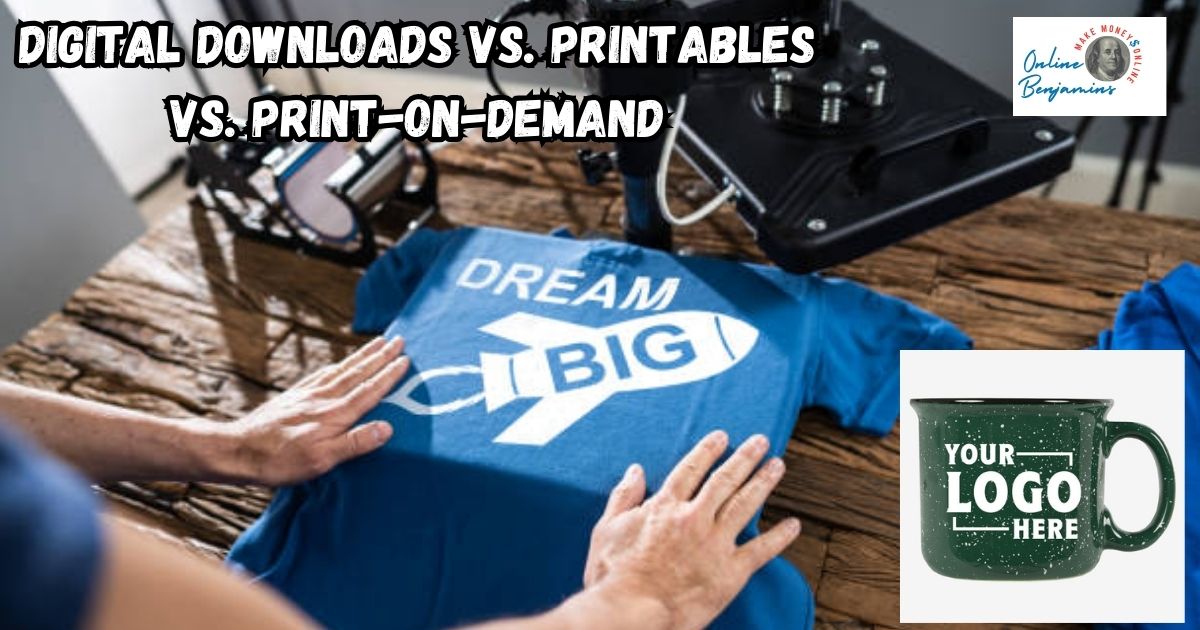
- Print on Demand (POD): This method lets you design physical products (such as t-shirts, mugs, or posters), which a POD company produces and ships only after a sale. You never deal with inventory or shipping yourself.
Knowing the differences up front helps you pick a method that matches your creative style and income goals. In fact, a lot of creators end up mixing the models to cover a wider audience—so it’s useful to get a sense of all of them before you pick one or more to try.
Profit Margins and Income Potential for Each Model
The biggest factor in revenue potential for creators is the profit margin, or how much you keep from each sale after costs.
QUICK LOOK: – Profit Margin Comparison
- Digital Downloads: Margins are really high, often 80% to 90%. After the initial work to create the product, there are usually just platform fees, like those from Etsy or Creative Market. There are no production or shipping costs, so most of your sale price stays with you.
- Printables: These work a lot like digital downloads. Margins stay around 80% to 90%, because you make the design once and sell as many copies as you want. The big brands in the space often sell bundles, packs of related worksheets or planners, for a higher price and better average order value. Printables can seem similar to standard digital downloads, but customers appreciate having files tailored for home printing.
- Print on Demand: Margins here are much lower, generally between 20% and 50%. The platform or company (like Printful or Printify) charges a base price for each product made, and you set your own retail price on top. For most products sold online, margins end up closer to 20% to 40%. The higher earning potential comes from moving a larger volume of products or creating premium, niche goods.
For someone focused on the highest percentage of profit per sale with the least ongoing effort, digital downloads and printables are the clear winner. If you want to move a larger amount of product, particularly physical goods, print-on-demand becomes more appealing, even with slimmer margins.
Revenue Drivers that Matter Most
The total money you make depends not just on how much you keep per sale, but on a few other key factors. Here’s how I look at it for each model:
- Product Pricing and Volume: Digital downloads and printables often sell for $2 to $25 each. While single printables are usually at the lower end, many sellers bump up earnings by selling themed bundles. Print-on-demand products, like t-shirts or mugs, often retail for $15 to $40, but your cut can be just a fraction of that.
- Marketplace Fees: Platforms like Etsy and Creative Market take a percentage (around 5% to 8%) and may add payment processing fees. Print-on-demand services also apply these and then subtract manufacturing costs as well.
- Competition: Print on demand is really competitive, as there are a lot more shops with similar products. Digital products and printables allow for more unique ideas and niche targeting, which can help you stand out. Creativity and branding really pay off in these models.
Your strategy for pricing, bundles, and marketing makes a real difference, so careful research helps buyers make informed decisions, especially in saturated markets. Sometimes it’s worth checking out what’s trending before deciding which products to focus on.
Effort, Scalability, and Passive Income Dynamics
All three models require creative effort up front, but the ongoing workload and growth potential vary a lot. Let’s break it down:
- Initial Work: Both digital products and print-on-demand need strong, appealing designs. In print-on-demand, I often spend more time creating mockups for each product and setting up listings for multiple item types—like shirts, mugs, and more. Digital downloads and printables usually require less setup unless you offer many variations.
- Passive Income: Digital downloads and printables run almost entirely on autopilot after launch. Sales come in without additional effort. With print on demand, the shop can also be passive, but I sometimes need to adjust listings or manage customer service for physical goods.
- Scalability: Print on demand lets you quickly add more physical products using existing designs, which can ramp up total sales volume much faster than if you’re only selling digital products, but it comes with more admin and support needs. With digital products and printables, scaling usually means adding new designs, bundles, or themed collections—and you don’t have to worry about shipping or stock.
If I’m going after maximum passive income per hour worked, printable and digital downloads are hard to beat. Print on demand needs more active involvement for growth, but the opportunity for higher total monthly sales is much greater, especially in popular or seasonal niches where trends can drive sales spikes.
Common Questions Creators Ask About Revenue Models
I get a lot of questions from creators who are just getting started, so I want to answer some of the most frequent ones about earnings and strategy.
Should I start with digital downloads, printables, or print-on-demand?
If you want a quick setup, low ongoing effort, and high profit for each sale, start with digital downloads and printables. If you feel excited by the idea of seeing your art or designs on physical products, and you’re ready to play the long game for total revenue, try print on demand. Testing both in small ways is a smart move, too.
How do I increase my average order value?
Bundling related digital products—like entire planner systems, matching sets, or course packages—can push customers to buy more at once. Offering themed product lines in print-on-demand or seasonal printables can help, too. Upsells and cross promotions between product types also make a difference; for example, you might offer a printable version as a bonus with a physical product order.
Can I use both models at once?
Absolutely. Many successful creators sell a printable or digital version of their art, and also offer the same design as a t-shirt or mug through print-on-demand. This lets you cover more customer preferences and find new revenue streams. Expanding into both digital and physical spaces levels up your brand recognition and opens extra market channels.
Real World Creator Earnings Benchmarks
Being realistic about earnings is really important, especially for new creators. The numbers below come from my experience and a mix of public results from large online marketplaces and industry studies:
- Digital Downloads & Printables: Top 20% of creators usually make $2,500 to $5,000 per month. Many new sellers in high-demand niches can reach $1,000 per month in three to six months by consistently adding new products and putting effort into promotion. These numbers show that once you hit your stride, growth can be steady and recurring for digital products and printables.
- Print on Demand: The very top sellers achieve five-figure monthly revenues. Printful reports that about 3.8% of shops make over $50,000 monthly, but the average shop makes far less due to intense competition. Reaching $1,000 per month is doable, but it tends to take longer and depend more on volume than price per product. The variety of available items and ongoing new trends means there’s always a chance to grow if you spot upcoming opportunities.
Some creators use a hybrid approach, selling both printables and print-on-demand products using the same art or design themes. This method can balance high-margin digital income with the excitement (and branding benefits) of physical product sales. Experimenting with both models is often the best way for new creators to test their audience and grow revenue over time.
Practical Pros and Cons for Each Approach
Here’s my take on what creators should weigh before picking a model for their work:
- Digital Downloads & Printables:
- Pros: Highest profits per sale, instant delivery, and potential for passive income. Easy to bundle products or create upsells with coordinated designs and themed packages.
- Cons: Some creative niches are getting crowded, and protecting your work from unauthorized redistribution can be a challenge. You may need to educate customers about printing at home for the best results.
- Print on Demand:
- Pros: No upfront costs for inventory or shipping, plus the appeal of sending branded, physical items to your fans and customers. A shop can grow quickly with new product types, especially by following seasonal and trending themes.
- Cons: Profit margins stay lower, and you have less control over production quality and fulfillment speed since third-party companies handle that part. Customer service demands may increase, especially during busy shopping seasons.
Your ideal choice will depend on your skills, goals, and how involved you want to be with customers and logistics. It’s a good idea to compare your strengths and interests with the effort needed by each model, and remember that you can always mix things up down the road.
Tips for Boosting Revenue No Matter Which Approach You Choose
Staying flexible and business-minded is really important for building income as a creator. Here are a few practical tips that have helped me and other online sellers I know make more money:
- Keep adding new products or designs on a regular schedule. Shops that grow get more attention from marketplaces and keep customers coming back for more. Fresh additions can make your whole catalog more visible.
- Pay attention to what sells best, and double down on popular themes or product types. If you notice a certain design doing well, create variations or expand the line.
- Use customer feedback to improve existing items, fix issues, or add popular variants. Sometimes, a small tweak based on buyer feedback boosts sales and leads to better reviews.
- Promote your shop on social media, to your email list, and by teaming up with other creators or influencers in your space. Getting the word out across several channels expands your reach and audience.
- Experiment with seasonal, holiday, or trending topics within your style. Fast adaptation can set you apart from others stuck in the same product niche.
Trying a mix of digital and physical models can also help you tap into trending niches and build a more flexible, sustainable income as a creator. The key is staying active, listening to your market, and not being afraid to experiment as you build your creative business.
Check Out Our Most Recent Articles:
- Increasing Engagement To Boost Affiliate Marketing Income
- Scaling Content Production Without Increasing Costs

- Balancing Content Quality And Posting Frequency

- Is The Dreaded Google “Shadow Ban” Real?

- Low Website Traffic Affecting My Google AdSense Earnings

- Best Strategies To Overcome Content Creator Burnout

Wishing You Much Success in Growing Your Ecommerce Business,

- onlinebenjamins.com
- thebeachangler.com
- thesinnerinthemirror.com
- diyoutdoorsmen.com
- Facebook: Online Benjamins
- Twitter: @onlinebenjamin1
- Instagram: dotcomdinero
- YouTube: Online Benjamins
Rex
P.S. If you have any questions or are unsure of anything, I am here, and I promise I will get back to you on all of your questions and comments. Just leave them below in the comment section. Follow me on Twitter: @onlinebenjamin1, Instagram: dotcomdinero, and Facebook: Online Benjamins.


Hi,
Thanks for stopping by and congratulations for taking the first steps to building your own online business. I’ve been in business both offline and online since 1997. I would consider it an honor to help you build your business. Father of 3, life long outdoorsman with an education in Genetics and Economics. This site is about cutting through the BS and finding the real opportunities in the online world. I look forward to working with you.